To Be Seen by Catherine Opie
Exhibition view images by Feminine Moments/ Birthe Havmøller
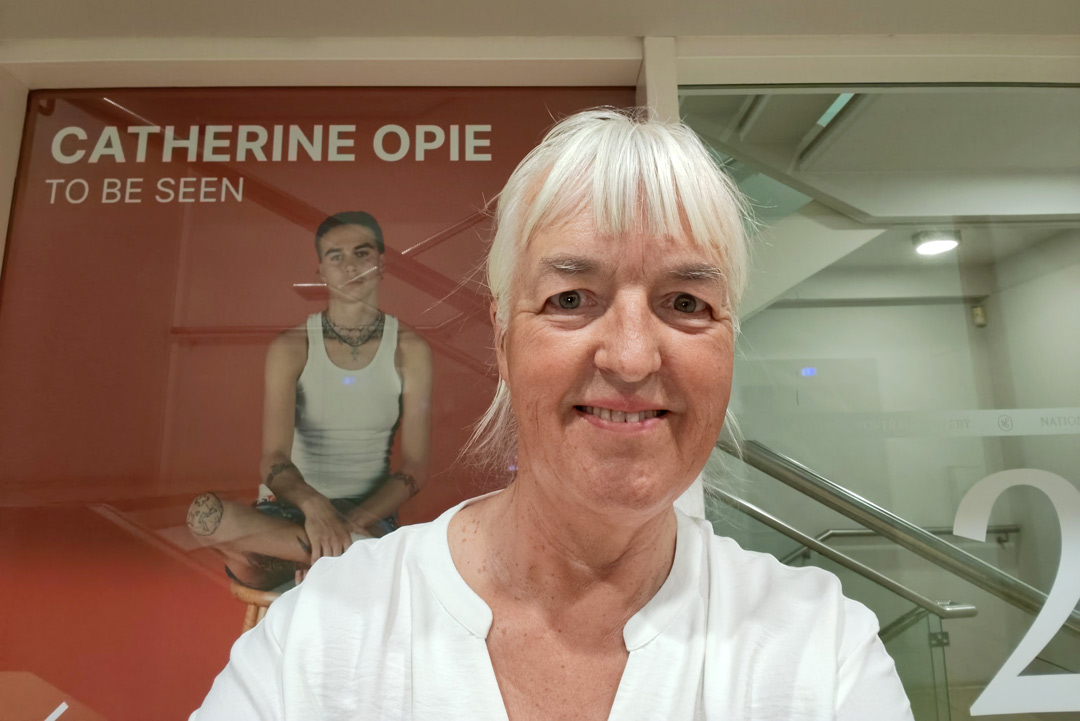
Birthe Havmøller/Feminine Moments at The National Portrait Gallery in London.
Catherine Opie: To Be Seen
Catherine Opie: To Be Seen at the National Portrait Gallery (March 5 – May 31, 2026) showcases photographic portraits by the American artist Catherine Opie. The exhibition, curated in collaboration with the artist, is the first major museum exhibition of her work in the UK.
Opie’s work questions representations of home, intimacy and family, politics, queer identity and power structures.
I visited the show to see some of the artist’s most iconic works in person, during my visit to London, the last weekend in May. I have known her works for years from my online research and blogging about queer feminist art and artists.
To Be Seen is a retrospective presentation of Catherine Opie’s portraits with early black and white works and her famous colour portraits such as Being and Having, (1991) and later works such as Surfers (2003) and Oliver in a Tutu, (2004). It was hung in a series of small rooms and corridors. In addition to this exhibition (for which you had to pay), a series of interventions placed Opie’s photographs in dialogue with the permanent Collection (free admission), probing further representation in the context of the National Portrait Gallery; see my exhibtion view photo of one of one of the interventions with Catherine Opies portraits in the Collection at the bottom of this post.

Dyke (1993), by Catherine Opie.
The Gallery’s introduction to the exhibition:
Catherine Opie developed a grounding in social documentary photography during her BA studies at San Francisco Art Institute in the early 1980s. Moving to the city, she worked and lodged at the Kenmore Residence club, coming out as a lesbian having her significant relationship. Relocating to Southern California to complete her MFA at California Institute of the Arts, opie refined her technical skills and her Critical approach to image-making. Following her graduation in 1988, she turned her focus towards her own community, producing work that foregrounded the visibility of her LGBTQ+ friends and, as the HIV/AIDS epidemic caused extreme loss, operated as a form of cultural resistance.
Key early works from Being and Having (1991) and the Portrait series (1993-197) are presented alongside intimide depictions drawn from Opie’s photographic archive, creating a dialogue between public representation and private experience.

Rave, 1990, 1990/1994. Pigment exhibtion print. by Catherine Opie.
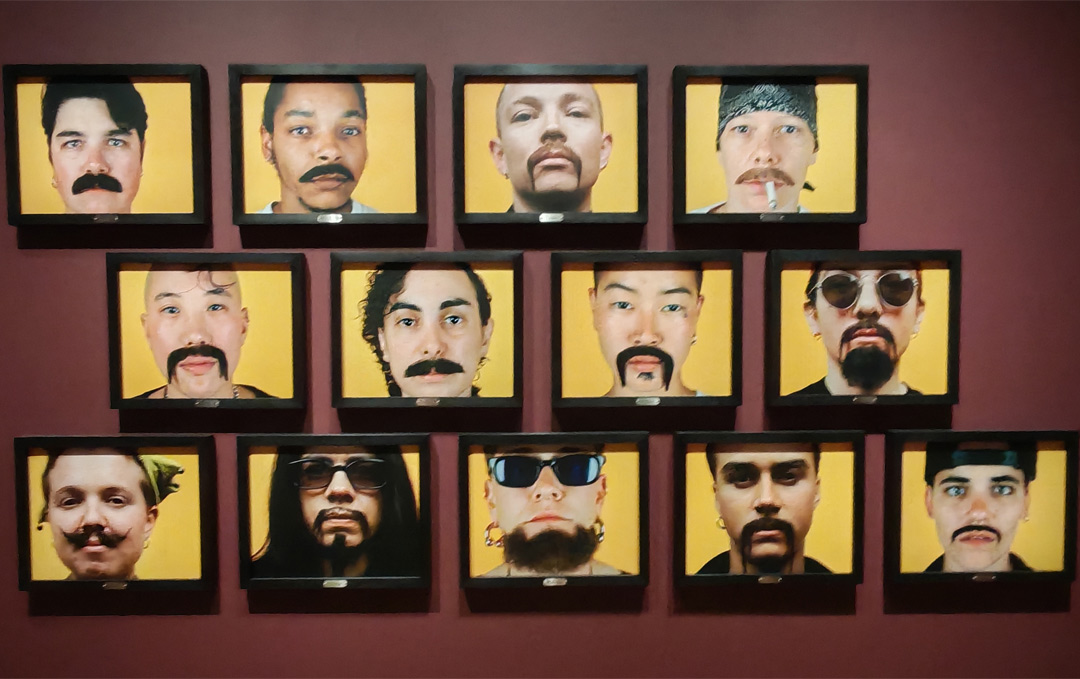
Being and Having (1991) by Catherine Opie.

Bo, 1994 by Catherine Opie
The Gallery’s text about Bo, a self-portrait: This portrait was taken in the mid-199s when Opie was gaining recognition for her portrayal of the Queer community through the grandeur and dignity of exquisitely rendered photographs. Bo was a persona Opie developed among her friends, dissolving the notion of singular identity.
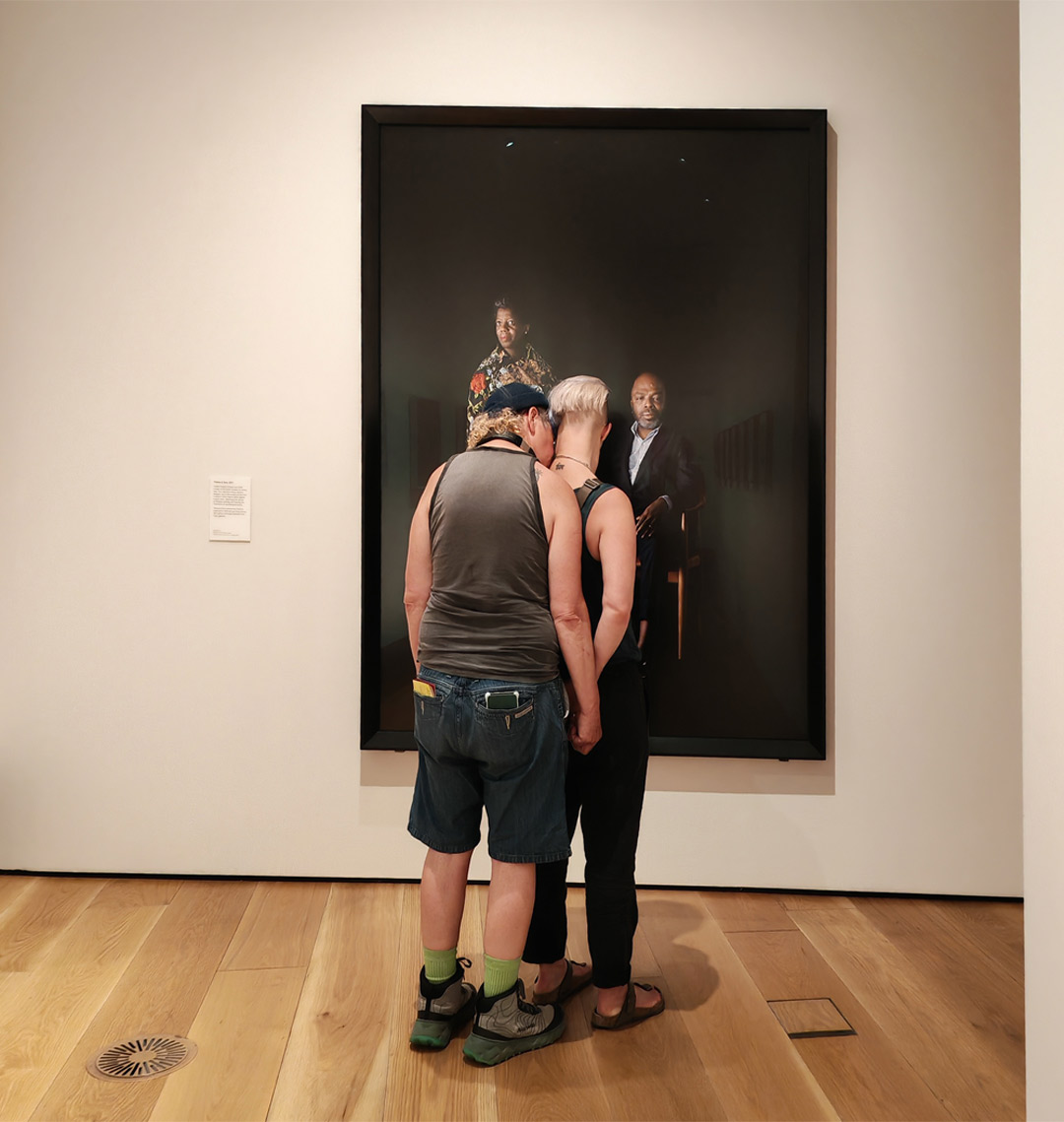
A queer couple visiting ‘To Be Seen’ by Catherine Opie by Birthe Havmøller (2026).
I spotted a few examples of Catherine Opie’s works presented in the general collection of the National Portrait Gallery. And found the (following) lesbian portrait (right) alongside a self-portrait by British artist Gwen John (1876-1939) interesting.
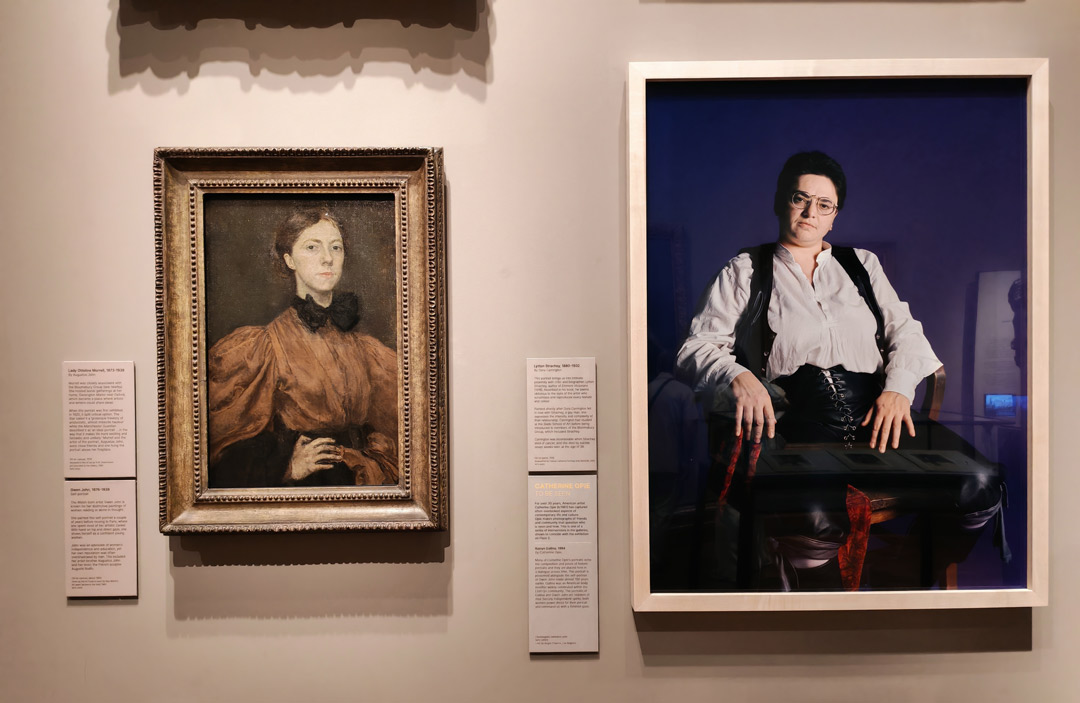
Exhibtion view. Left: Oil on Canvas, about 1900, by Gwen John. Right: Raelyn Gallina, 1994 by Catherine Opie.
Exhibition text bottom left:
Gwen John, 1876-1939, Self-portrait
The Welsh-born artist Gwen John is known for her distinctive portraits of women reading or alone in thought.She this self-portrait a couple of years before moving to Paris, where she spent most of her artistic career. With hand on hip and direct gaze, she shows herself as a confident young woman. John was an advocate of women’s independence and education, yet her own reputation was often overshadowed by men. This included her artist brother Augustus John and her lover, the French sculptor Auguste Rodin.
Exhibition text bottom right:
Catherine Opie: To Be Seen
For over 30 years, American artist Catherine Opie (b. 1961) has captured often overlooked aspects of contemporary life and culture. Opie makes photographs of friends and community that questions who is seen and how. this is one of a series of interventions in the galleries shown to coincide with the exhibition on Floor 2.
Raelyn Gallina, 1994 by Catherine Opie
Many of Catherine Opie’s portraits echo the composition and poses of historic portraits and they are placed here in a dialogue across time. This portrait is presented alongside the self-portrait of Gwen John made almost 100 years earlier. Gallina with an American body modifier widely celebrated within the LGBTQ+ community. The portraits of Gallina and Gwen John are redolent of their fiercely independent spirits; both women power dress for their portraits and command us with a feminist gaze.
Discover the powerful photographic portraits by American artist Catherine Opie
The exhibition will travel to Scotland this summer. Visit ‘Catherine Opie: To Be Seen‘ at Royal Scottish Academy from Sat 8 Aug 2026 – Sun 1 Nov 2026 in Edinburgh, UK.